

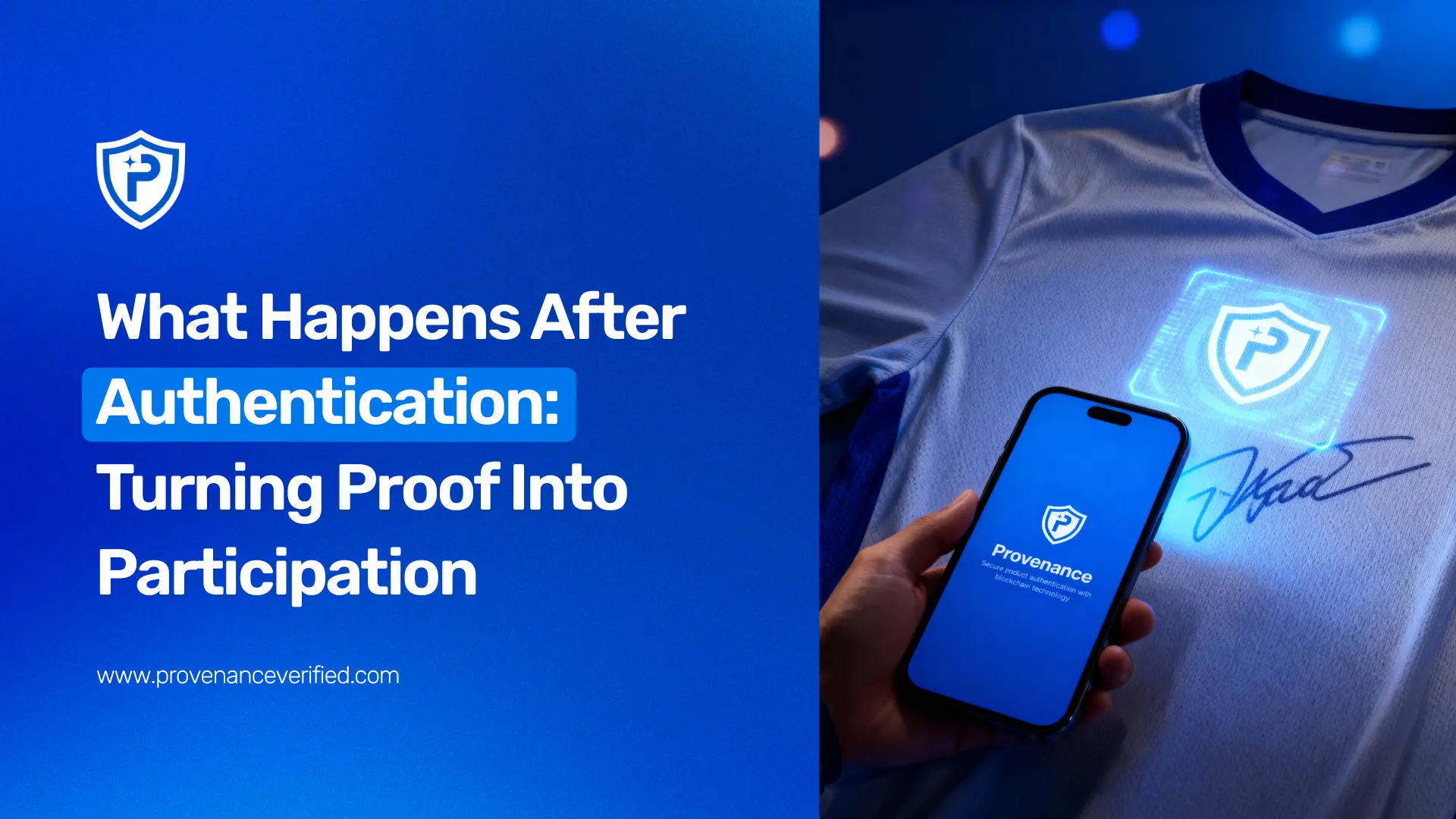
In sports collectibles, authenticity used to be the end of the story.
A jersey was real.
A signature was verified.
And that was enough.
Not anymore.
Collectors today want more than proof. They want connection. They want to trace where an item came from, who held it, and what moment it represents. They want a story that does not stop when the ink dries. Provenance builds that story.
It is a digital layer that turns verified memorabilia into living assets, connected, traceable, and active within a trusted ecosystem. Every scuff, every signature, every tag now carries a story that can finally be proven and shared.
1. Where Proof Ends and Opportunity Begins
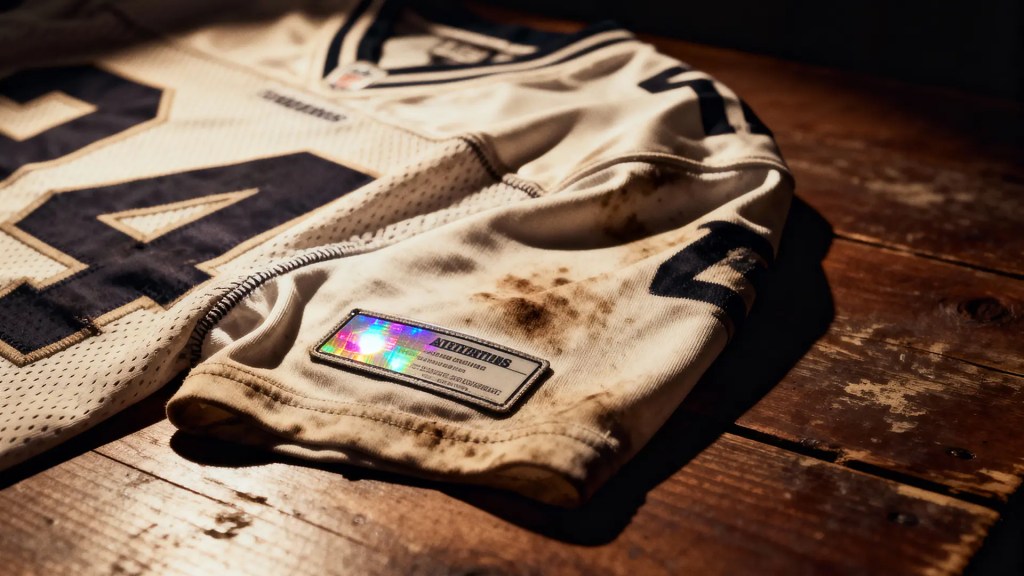
Leagues like MLB and F1 have already shown what strong authentication looks like.
Items are tagged, logged, and issued with official holograms or certificates. The process stops counterfeits, but not the story.
Once that jersey leaves the locker room, the record fades.
The proof exists, but it cannot travel.
Fans cannot trace it.
Teams cannot connect with it.
Collectors cannot verify it again.
Provenance does not replace systems like MLB Authentication.
It extends them, keeping every record alive from game to fan to future sale.
2. The Lifecycle of Trust: From Issue to Ownership

Every collectible has a timeline.
First, it is issued, logged by a team’s equipment staff.
Then, it is authenticated, verified after play by an on-site league expert.
Finally, it is transferred to an auction, a retail store, or a direct buyer.
Provenance captures each step in one digital chain.
It links the NFC tag on the item to a secure blockchain record.
When a fan scans the tag, they see the full journey, where it came from, when it was verified, and every owner since. That record never resets. Even if the item trades hands ten times, the story stays intact.
Provenance keeps the history that collectors value most, the path of the item itself.
3. The Shift: From Proof to Participation
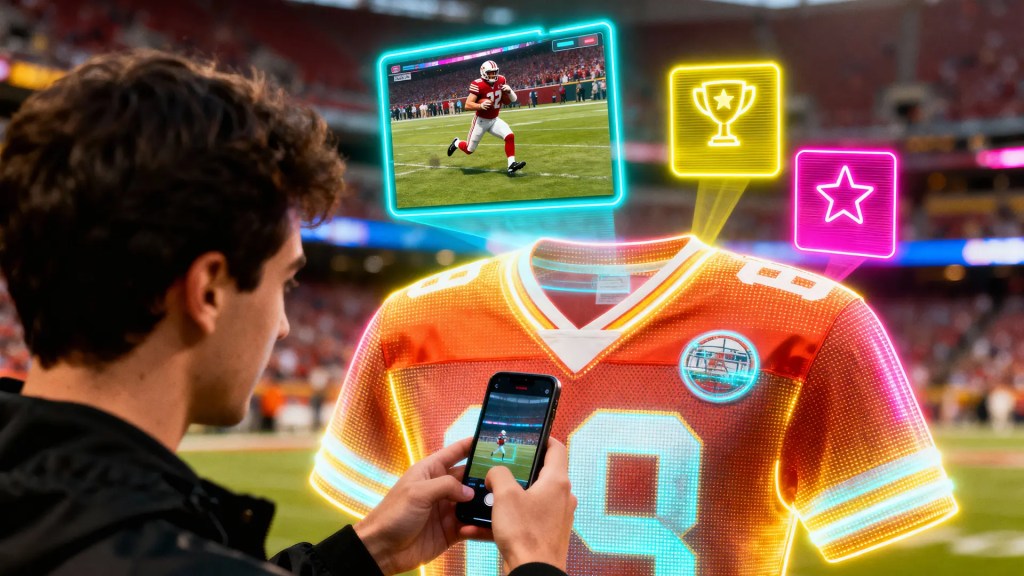
Once authentication goes digital, new possibilities open.
Imagine this:
A fan scans a game-used jersey and watches the play it came from.
A verified owner unlocks loyalty rewards or early access to drops.
A resale automatically updates ownership and keeps the record clean.
A team earns revenue from verified secondary sales without the gray market.
That is the new collectibles economy.
Ownership that is verified.
Engagement that is built in.
Provenance connects teams, leagues, and fans through shared history, turning proof into participation.
4. The Future: Proof as Infrastructure
Authentication solved counterfeits.
Provenance solves continuity.
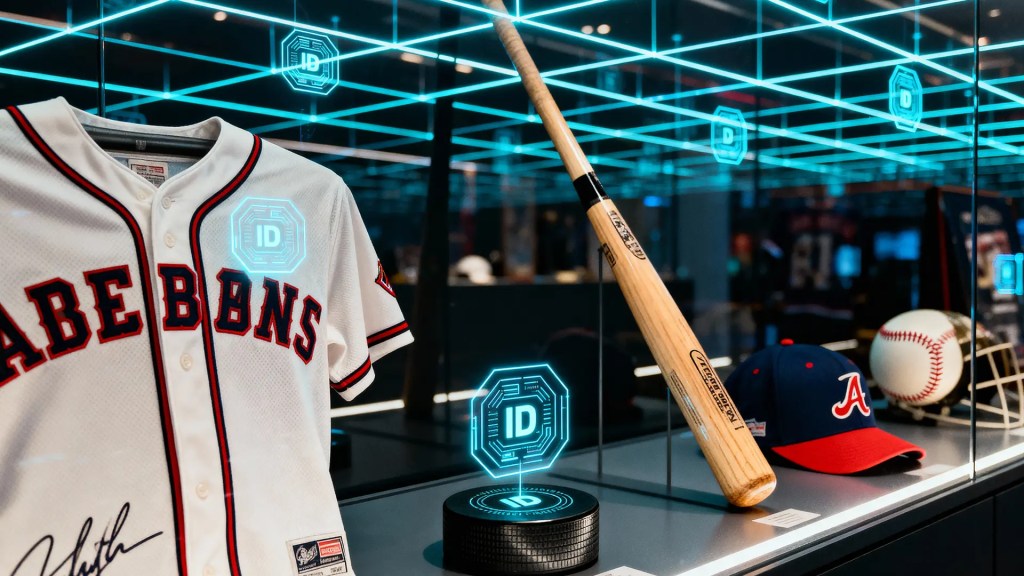
Every authenticated item, from a jersey to a game-used ball, should carry a digital ID that lasts forever.
That ID travels with the item through resale, display, and trade. It proves not just where it came from, but where it has been.
For collectors, it means ownership that endures.
For teams, it means new engagement and recurring value.
For the industry, it means trust that scales.
Provenance is more than proof. It is infrastructure for the next era of sports memorabilia.