


How Provenance Works: A Practical Reference for Teams
Game-used, team-issued, signed, and premium merchandise all depend on trust.
A fan may buy a puck, jersey, ball, bat, helmet, glove, photo, credential, or event-used item because of the story attached to it. It came from a specific game. It was used by a specific player. It was signed in a controlled setting. It came directly from the team. It represents a moment that matters.
But in the traditional memorabilia market, that story can become hard to prove over time. Paper certificates get separated from items. Receipts get lost. Ownership changes hands privately. Casual autographs and resale listings often rely on trust, memory, or third-party authentication after the fact.
Provenance is designed to solve that problem at the source.
Provenance creates a verified digital ownership record for physical memorabilia. The item is registered before sale, connected to a Digital Deed, sold through the team’s authorized retail or POS channel, and then claimed by the purchaser. From there, Provenance maintains the ownership history and supports future transfers or resale.
The goal is simple: give teams a trusted way to turn physical items into verified collectibles, while giving fans confidence that the item they own has a clear and durable record behind it.
What Provenance Is
Provenance is an ownership infrastructure platform for collectible merchandise.
It is built for items such as:
- Game-used merchandise
- Team-issued merchandise
- Signed items
- Limited-edition collectibles
- Premium retail items
- Event-used or moment-specific merchandise
- Auction or charity items
- Special releases tied to players, games, milestones, or venues
Each item receives a Digital Deed. That deed connects the physical item to a verified digital record and tracks ownership over time.
Provenance is not simply a certificate of authenticity. It is not just an NFC tag. It is not just a resale marketplace.
It is the system that connects the item, the team, the sale, the purchaser, and future ownership history.
What Makes Provenance Different
The key difference is where the verification starts.
Many memorabilia solutions try to authenticate an item after it has already entered the market. That can be useful, but it is also limited. Once an item is circulating publicly, the verification process often depends on inspection, expert opinion, photos, signatures, receipts, or other supporting evidence.

Provenance starts earlier.
The item is registered by the team, venue, or authorized seller before it is sold. That means the record begins at the point of entry, not after the item has already changed hands.
That distinction matters.
A game-used puck is more valuable when the team can register it before it reaches the fan. A signed jersey is more valuable when the signing and sale are part of an authorized workflow. A premium collectible is easier to trust when the first owner, first sale, and future transfers are all connected to the same digital record.
Provenance protects the story before the story gets separated from the item.
How It Works
Provenance works in three main steps:
- The team registers the item.
- The item is sold through the POS.
- The purchaser claims, transfers, or resells the item.
That creates a complete lifecycle from team-controlled registration to fan ownership.
Step 1: The Team Registers the Item
The process begins before the fan buys the item.
The team, venue, or authorized seller registers the item in Provenance. This does not have to happen at the moment of sale. In most cases, it should happen earlier.
For example, a team may register items days before they are made available for purchase. The registration may happen in an equipment room, merchandise office, authentication area, warehouse, or another controlled back-of-house environment. Once registered, the item can be moved to the team store, auction table, premium retail location, event booth, or other point of sale.
During registration, the item is connected to a verified digital record. That record may include information such as:
- Item type
- Team or organization
- Event or game
- Date
- Player, signer, or associated individual, if applicable
- Game-used, team-issued, signed, or limited-edition status
- Description of the item
- Photos or supporting details
- NFC tag or approved physical identifier
- Initial owner or issuing organization
This step establishes the item’s official starting point.
Before the item is sold, the team remains the owner of record. The item exists in Provenance, but it has not yet been claimed by a fan.
Step 2: The POS Sale Updates the Record
The second step happens when the item is sold.
When the fan purchases the item through the team’s authorized POS or retail channel, the sale updates the item’s record in Provenance.
Before the sale, the team is the owner of the item. After the sale, the team is no longer the owner, and the item becomes available to be claimed by the purchaser.
This is an important bridge.
The POS transaction connects the commercial sale to the ownership record. That means the Digital Deed is not floating separately from the retail transaction. It is tied to the actual sale event.
After purchase, the fan can access the claim experience through a QR code, link, NFC tap, receipt flow, or other approved method depending on how the team chooses to deploy the experience.
The sale does not just move inventory. It activates the next stage of ownership.
Step 3: The Purchaser Claims the Item
After the item is purchased, the buyer claims the Digital Deed.
Once claimed, the purchaser becomes the deedholder for that item. The Digital Deed reflects that the buyer is now the recorded owner.
This matters because ownership is not just about possession. In the collectibles market, ownership history can become part of the item’s value. A clean record helps future buyers, gift recipients, collectors, and teams understand where the item came from and how it has moved over time.
If the item was purchased as a gift, the recommended workflow is for the purchaser to claim it first and then transfer it to the gift recipient. Provenance supports one free transfer within the first 30 days of the sale.
That gives the original purchaser flexibility while still preserving a clean chain of custody.
What Happens When an Item Is Transferred
When an item is transferred, the deedholder changes.
The new owner becomes the current owner of record, and Provenance maintains the item’s transfer history. That history can show how the item moved from the team to the first purchaser and then to any future owner.
This is one of the most important parts of the Provenance model.
A traditional certificate may only prove that someone believed the item was authentic at one point in time. Provenance is designed to preserve the item’s ownership journey after that first sale.
For collectors, that creates a stronger chain of custody.
For teams, it creates a more controlled and trusted merchandise ecosystem.
Can Items Be Resold Through Provenance?
Yes.
Provenance can support peer-to-peer resale. If a fan buys a game-used puck, jersey, ball, or other collectible and later wants to sell it, the sale can happen through Provenance.
Provenance can also handle the escrow process as part of that peer-to-peer transaction.
This is important because resale is often where trust breaks down. A buyer may trust a team store or an official event auction, but years later, when the item is sold by an individual collector, the supporting documentation may be incomplete.
Provenance helps preserve the record. The Digital Deed stays connected to the item, the ownership history remains visible, and the transfer can occur through a controlled process.
That creates a better resale experience for both the seller and the buyer.
Provenance Is Not the Same as a Casual Autograph
This distinction is important for teams.
Provenance is not trying to authenticate every autograph in the wild. A player signing a jersey, ball, photo, or program for a fan at the rail may create a meaningful personal moment, but it does not automatically create Provenance.
A casual autograph may be real. It may have sentimental value. But unless it was captured through an authorized Provenance workflow, it does not carry the same verified record, Digital Deed, sale history, or chain of custody.
That is the difference between a signed object and a verified collectible.
A signature says someone signed the item. A paper certificate says someone verified something at a point in time. A Provenance Digital Deed says the item entered the system through an authorized workflow, was sold through a verified channel, was claimed by an owner, and has a recorded history of ownership and transfers.
That is a different level of trust.
Why This Matters in Today’s Memorabilia Market
The memorabilia market has changed.
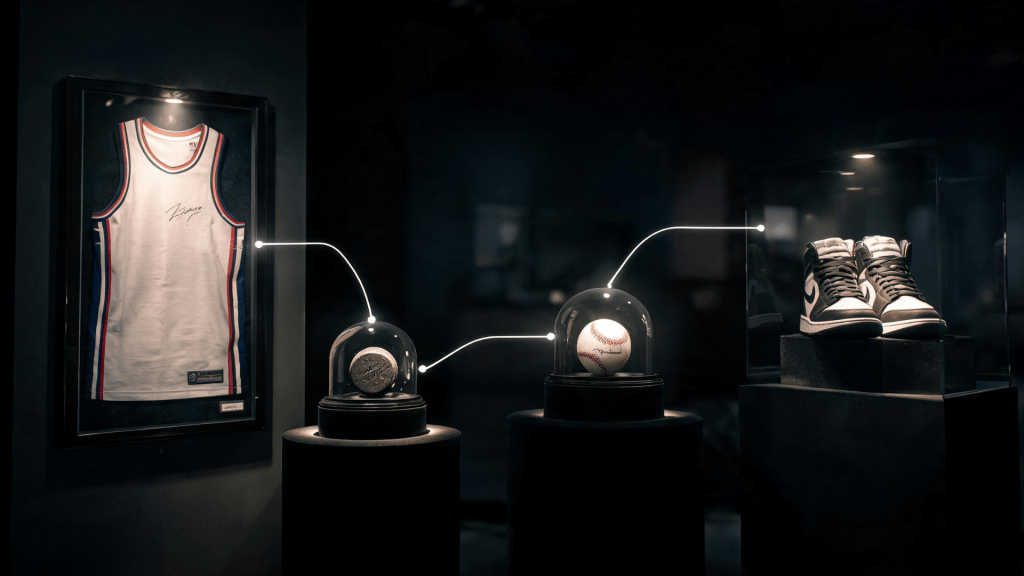
Players sign fewer items casually than they did decades ago. Access is more restricted. Security protocols are tighter. Team facilities and stadium environments are more controlled. Professional resellers often seek free signatures and quickly flip them online. Players, teams, leagues, and licensees now treat autographs, game-used items, and limited releases as valuable commercial assets.
At the same time, fans and collectors are more aware of fraud, forgery, and weak authentication.
That creates a clear opportunity for teams.
Instead of allowing value to leak into informal or aftermarket channels, teams can create official, verified collectible programs directly through their own retail and merchandise operations.
Provenance helps teams do that.
It gives teams a controlled way to register items, sell them through authorized channels, give fans a better ownership experience, and preserve the long-term value of the item.
What Happens If the NFC Tag Is Damaged?
The NFC tag is the physical connection point between the item and the digital record. It makes it easy for a fan, collector, or future buyer to access the item’s Provenance record.
But the NFC tag is not the record itself.
If the NFC tag is damaged, the item can still be tracked in Provenance because the Digital Deed and ownership history remain intact. The tag would need to be replaced through an authorized re-tagging process so the physical item can reconnect to the same digital record.
That process is important.
If anyone could simply replace a tag without authorization, trust would break down. Re-tagging needs to happen through an approved process that protects the link between the physical item and the verified record.
If a tag is lost or damaged, the item may still be traceable through its Digital Deed, ownership record, sale history, photos, item metadata, and authorized registration history. But the physical-to-digital connection should only be restored through an approved Provenance workflow.
Why Teams Use Provenance
For teams, Provenance creates a better way to manage premium collectible merchandise.
It can help teams:
- Protect the integrity of game-used and signed merchandise
- Create new revenue opportunities around verified collectibles
- Increase confidence in premium merchandise programs
- Reduce counterfeit and resale risk
- Support gifting and future ownership transfers
- Give fans a better post-purchase experience
- Preserve the story behind meaningful items
- Maintain a trusted record from first sale through future resale
Most importantly, Provenance helps teams control the first mile of the collectible journey.
That first mile matters. If the item is registered properly before sale, the rest of the ownership history has a stronger foundation.
Why Fans and Collectors Use Provenance
For fans and collectors, Provenance creates confidence.
They are not just buying an item and relying on a paper certificate, a verbal story, or a receipt that may disappear over time. They are receiving a Digital Deed connected to the item’s verified record.

That gives the owner:
- A claimable record of ownership
- A verified connection to the team or authorized seller
- A cleaner gifting experience
- A stronger resale path
- A visible transfer history
- More confidence in the item’s story
For many fans, the emotional value will always matter most. The item represents a player, a game, a season, a championship, or a personal memory.
Provenance does not replace that emotional value. It protects it.
The Bigger Opportunity
Sports and entertainment merchandise is becoming more than a transaction.
Fans want access to moments. Teams want to create higher-margin merchandise programs. Collectors want confidence. Buyers want proof. Sellers want liquidity. The market wants better infrastructure.
Provenance gives teams a way to turn physical items into verified assets without losing control of the fan experience.
A game-used item should not lose its story after it leaves the building. A signed jersey should not become harder to trust every time it changes hands. A premium collectible should not depend on a paper certificate that can be lost, copied, or separated from the item.
The future of memorabilia will be built on verified records, clean ownership history, and trusted links between the physical item and the moment it represents.
That is what Provenance provides.
Every great collectible has a story.
Provenance makes that story verifiable.